The Vanished Viaduct Blueprint
Learn English with Sherlock Holmes Mystery Stories — Intermediate (B1)
Thick yellow fog hung over London when a breathless gentleman arrived at Baker Street late one Friday night. "I have lost my life's work," cried Arthur Vance, who designed grand bridges for the southern railway. Someone had stolen his locked leather case inside a private carriage on the midnight express train to Brighton, which had stopped just outside the city.
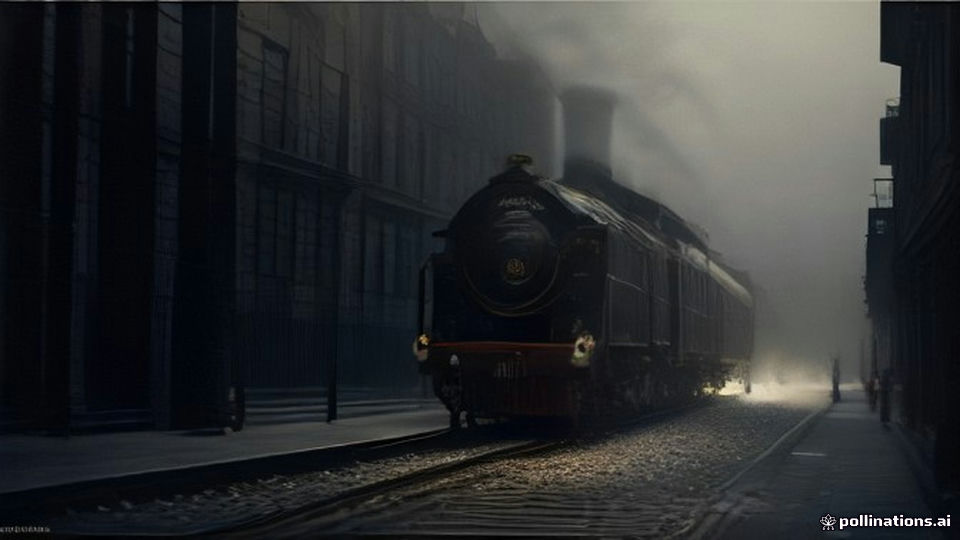
The case held a confidential architectural blueprint for a new coastal viaduct. "This thief must have planned the crime carefully," Sherlock Holmes remarked as he grabbed his heavy coat. Ten minutes later, we entered the smoky hall of Victoria Station, where the iron locomotive still hissed with steam.
Vance explained that two men had shared his compartment before the train departed. One was a nervous clerk, and the other was a tall engineer who wore dark spectacles. "Nobody could have jumped from a moving train without leaving a trace," I suggested. Holmes smiled calmly and knelt beside the velvet seats to inspect the floor with his magnifying glass.
Holmes carefully examined a damp smudge of pale grey clay near the carriage door. "Look at this mud, Watson," he whispered excitedly. "It is not ordinary London dirt, which is usually dark and gritty. I have seen this smooth chalky substance only along the banks of the River Ouse in Sussex."
Just then, a station guard approached us with a lantern that cast flickering shadows across the polished wood. "Both passengers have left their addresses at the ticket office," the guard reported. "However, the tall engineer looked quite anxious when he stepped onto the platform."
"He might be our suspect," I replied, "because he carried a heavy bag." Holmes shook his head thoughtfully. "We must not guess too quickly, my dear friend. The clerk works near the River Ouse, whereas the engineer has lived in Manchester for five years. Let us visit the clerk's lodging near Waterloo Bridge before dawn breaks, for the river mud cannot lie."
We reached a narrow brick house where a single gaslight flickered behind lace curtains. When the pale clerk, Edward Finch, opened the door, Holmes pointed directly at the muddy boots that stood beside the umbrella stand. "You have made a terrible mistake, Mr. Finch," Holmes announced calmly. "Those boots are coated with pale clay from the Ouse river bank, where you walked earlier today before boarding the train."
Finch trembled and stepped back into the hallway. "A rival company paid me to take the blueprint," he admitted softly. "They knew I needed money to pay my debts, so I waited until Vance fell asleep and pulled the emergency cord."
Minutes later, we found the stolen architectural blueprint hidden inside a hollow wooden clock on the mantelpiece. Vance wept with relief when we returned his priceless plans at sunrise. "I have never witnessed such brilliant deduction," the architect declared gratefully. As we walked home through the waking streets of London, Holmes remarked that even the smallest speck of river mud can reveal the greatest secret.